
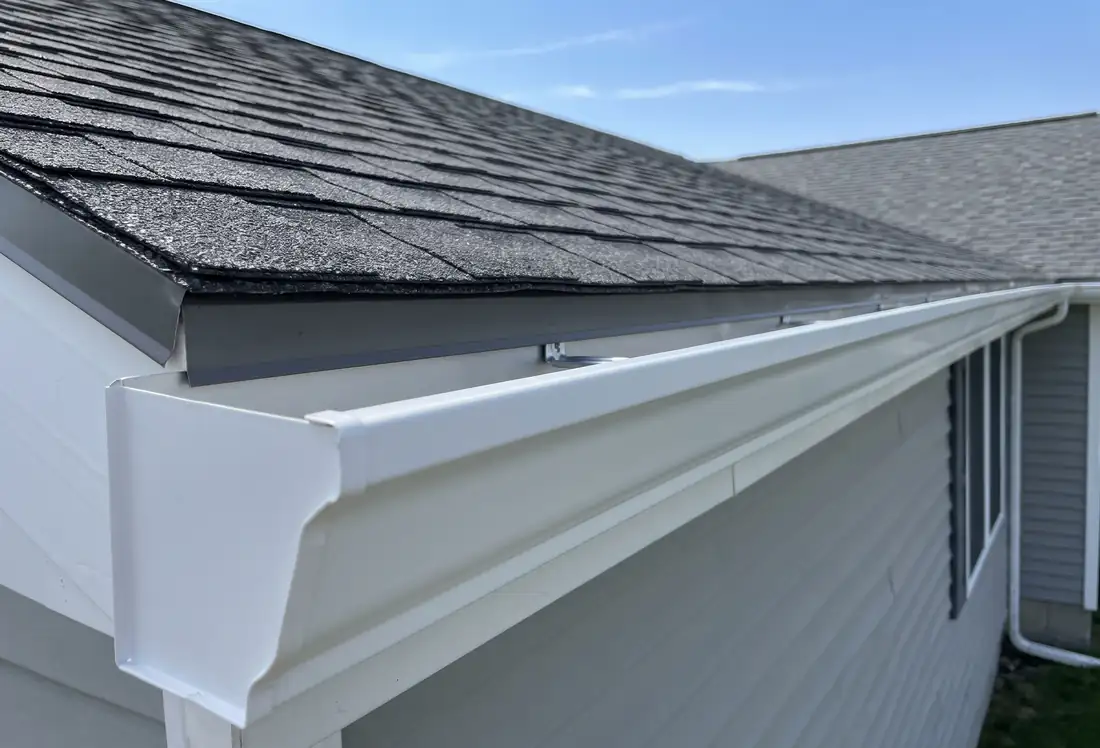
What drip edge does
Rain runs down the shingles to the roof edge. Without a drip edge, some of it curls back under the shingle edge by surface tension and runs down the fascia, behind the gutter. That water rots the fascia, stains the brick and drips at the slab, even when the gutter itself is perfect.
A drip edge is a bent strip of metal installed at the roof edge. It carries water out past the fascia and drops it into the gutter.
Signs you may be missing it
- Water stains or peeling paint on the fascia behind the gutter
- Drips between the gutter and the house in a storm
- Soft fascia boards
- A gap you can see between the shingles and the back of the gutter
Types
| Type | Use |
|---|---|
| Drip edge (L or D shape) | Standard at eaves and rakes |
| Gutter apron | Reaches down into the gutter where there is a gap |
| Extended drip edge | Where shingles do not overhang enough |
Drip edge and new roofs
After hail, many Mesquite owners replace roofs. North Texas has some of the costliest hail on record, and a roof replacement is the easiest time to fit drip edge. It also makes sense to do gutters at the same time, so the drip edge and gutters line up.
Drip edge on older houses
Many older Mesquite houses, built in the decades of fast growth after 1950, were roofed without drip edge. If the fascia is soft and the roof is not being replaced, a contractor can often slide a gutter apron under the first course of shingles when hanging new gutters.
On clay soil
Water that runs behind the gutter lands right at the slab. On Blackland Prairie clay, that is the worst place for it. Drip edge is part of keeping roof water away from the foundation.
Installing gutters with drip edge
The gutter should sit so the drip edge drops water into the trough, not behind it. Installers hang the back of the gutter tight to the fascia, just below the drip edge, and set the pitch so the top of the back edge stays under the roof edge along the whole run. If the gutter has to sit lower at the downspout end, a gutter apron covers the gap.